
 English
 Vietnamese
In the first 11 months of 2025, Vietnam’s cashew exports surpassed USD 4.7 billion, recording strong growth in both volume and value; however, business performance across the industry did not fully reflect this impressive figure. The main reason lay in the sharp rise in input costs. According to the Agency of Foreign Trade, citing data from Vietnam Customs, the average export price reached USD 6,820 per ton, up 15% year on year, contributing to an almost 20% increase in export turnover. At the same time, Vinacas reported that the average price of imported raw cashew nuts rose by more than 19% to USD 1,522 per ton. With import volumes of around 2.9 million tons, the total import value surged to USD 4.4 billion, significantly squeezing profit margins. As a result, many companies recorded large export volumes but low profitability, with some even facing financial difficulties. Pressure intensified as exports to the United States, one of Vietnam’s three largest markets fell sharply, with volumes down more than 26% in the first 11 months of 2025, raising concerns about the industry’s ability to sustain growth momentum.
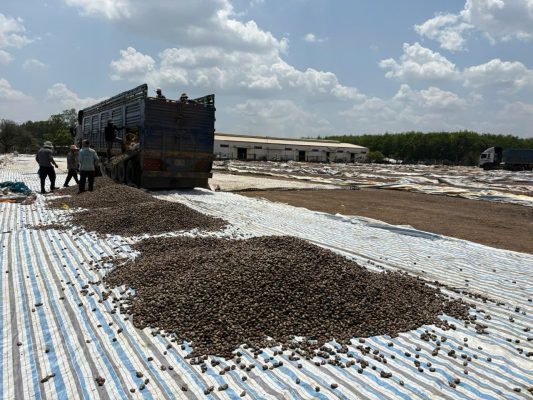
Entering 2026, market prospects are viewed more positively, particularly as semi-processed cashew kernels are exempt from retaliatory tariffs when entering the U.S. market, providing momentum for export recovery. The early 2026 cashew season in key growing areas such as Bình Phước, Đồng Nai, and Đắk Lắk is unfolding under the strong influence of climate variability. The flowering stage (December 2025–February 2026) requires dry weather and stable sunshine; unseasonal rainfall can cause flower drop and reduce fruit set. The nut development stage (February–March 2026) needs moderate moisture, while prolonged drought may result in small nuts, shriveled kernels, and lower ratios of white kernels. During the harvest period (March–April 2026), dry conditions are crucial for quality, as heavy rains can lead to mold, scorching, or discoloration, directly affecting export suitability.
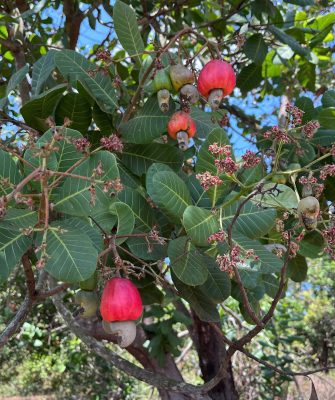
Climate forecasts for 2025–2026 indicate that El Niño is expected to weaken toward the end of 2025, although localized droughts may persist in the Southeast and Central Highlands, while unseasonal rains remain a risk. Average temperatures are projected to be 0.5–1°C higher than the long-term norm; rainfall is expected to decline during the dry season but may increase sharply toward its end, creating favorable conditions for pests and diseases. On this basis, cashew yields in 2026 are forecast at around 1.3–1.4 tons per hectare, with national production estimated at 1.7–1.8 million tons, relatively stable overall but unevenly distributed across regions. Output in the Central Highlands may decline significantly, while Bình Phước is expected to maintain production thanks to intensive farming practices. Kernel quality also faces risks if rainfall occurs during harvest, reducing the proportion of white kernels—an important criterion for demanding markets such as the U.S. and EU.
Overall, weather remains the decisive variable for Vietnam’s 2026 cashew crop, directly affecting yields, quality, and export FOB prices. Any decline in domestic production or quality would push FOB prices higher, particularly for popular grades such as WW320 and WW240. In this context, proactively securing raw material supplies, flexibly sourcing additional imports from Africa, investing in processing technology, and strengthening order-based production capacity will be key for Vietnamese exporters to mitigate risks, maintain supply chains, and continue safeguarding Vietnam’s global leadership in the cashew industry.